
What to Know Before Planning a Destination Proposal
Most people approach a destination proposal with a clear image of the moment and a vague sense of how to reach it. The gap between the image and the execution is where most of the difficulty lives.
This is not a reason to hesitate. It is a reason to plan properly.
The Decision You Make First Changes Everything Else
The destination is not one decision among many. It is the decision that determines every other one.
The destination sets the light quality, the atmosphere, the level of privacy available, the photographer options, the logistical complexity of the day, and what kind of story you will carry home. It also determines whether the setting is genuinely right for the two of you or simply right in a general sense.
Take more time with this decision than feels necessary. The right destination is not the one with the best photographs online. It is the one that, when you picture both of you standing inside it, feels completely true.
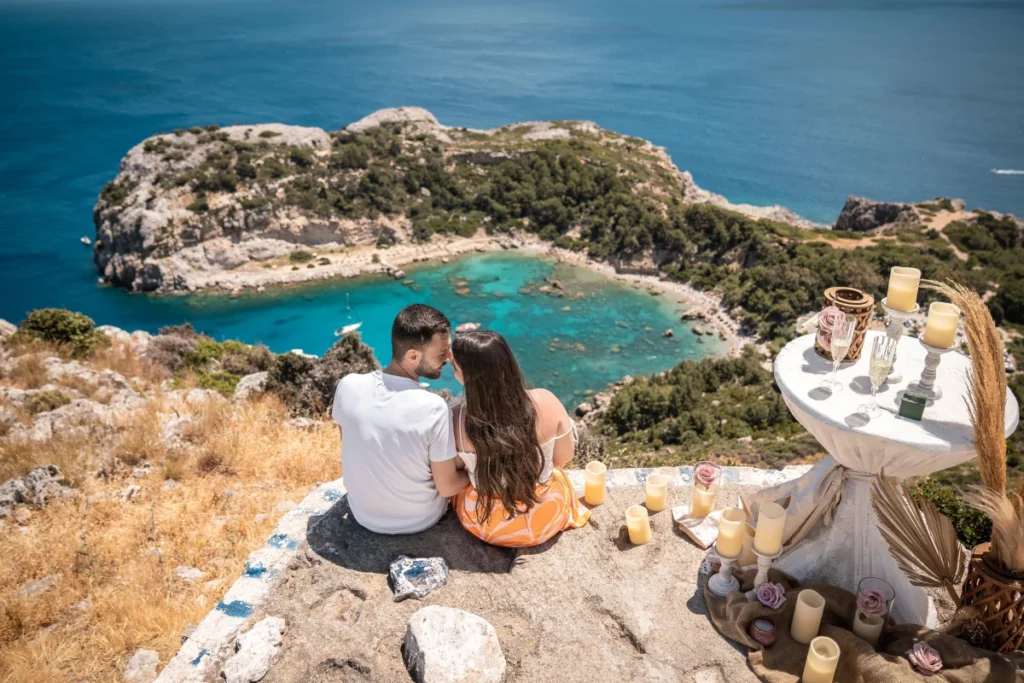
Understand That the Timing Is a Planning Variable
Most people think of timing as the date of the trip. In proposal planning, timing means something more specific: the exact hour of the proposal, relative to the light conditions of the destination on that specific date.
Golden hour – the window before sunset – is the correct moment for most outdoor proposals, not for romantic reasons but for practical ones. The light is warm and directional. The atmosphere shifts. The crowds at most locations thin naturally. The visual conditions for photography are at their best.
Golden hour moves through the year, and its quality varies considerably by destination and season. A planner familiar with the specific location knows this. If you are planning independently, build this research into the process early.
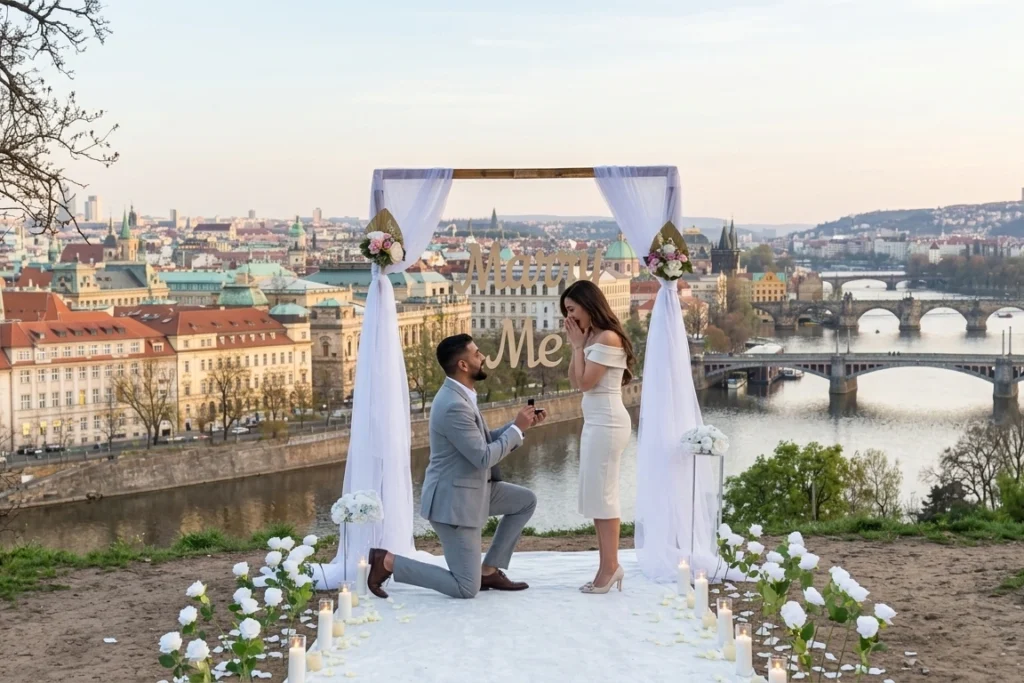
Keep the Secret Properly
The surprise element of a destination proposal requires active management, not passive hope.
The ring travels in carry-on luggage, not checked baggage. Communication with local suppliers and photographers happens through channels your partner does not access. Hotel staff are briefed on exactly what they need to know – and nothing more. The cover story that gets both of you to the location is simple, casual, and consistent.
The most common exposure points are not dramatic failures. They are small moments: a notification seen at the wrong time, a well-intentioned comment from hotel staff, a supplier calling at an inconvenient moment. Each of these is preventable with specific planning.
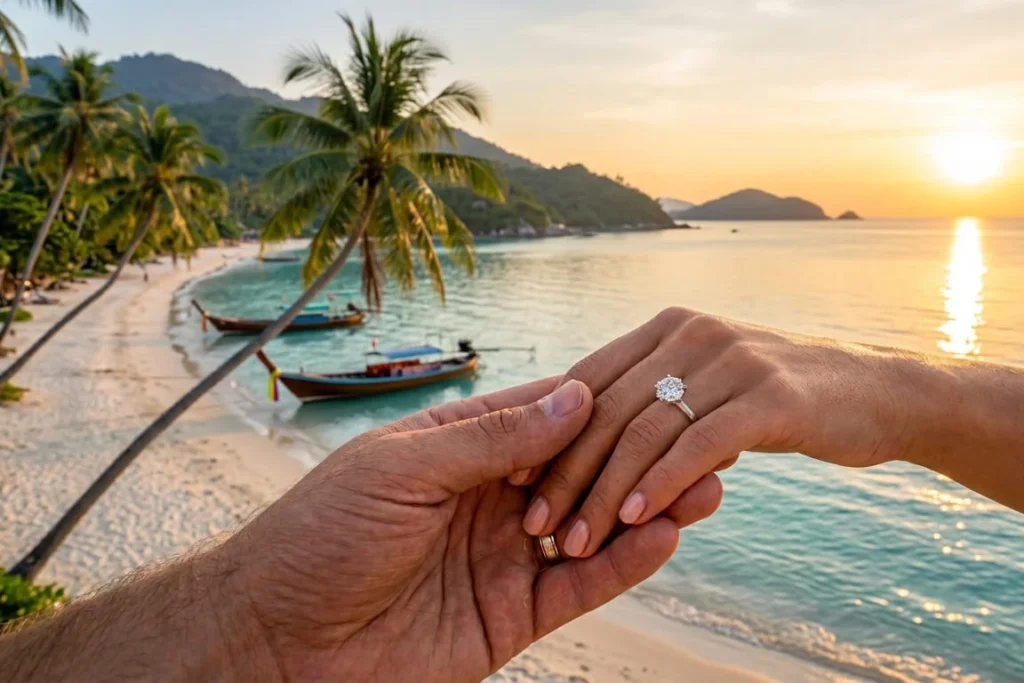
Photography Is Part of the Plan, Not an Optional Addition
A proposal without properly arranged photography is a proposal that exists only in memory.
This is not an argument for elaborate photographic production. It is an argument for a single photographer who was briefed in advance, knows the location, was positioned before you arrived, and understood the timing. The difference between this and a phone photograph taken by a passing stranger is significant – and permanent.

Know When to Ask for Help
There is a version of the destination proposal that can be planned independently. It requires considerable research, international coordination across time zones, reliable local contacts, and enough margin to absorb variables that do not go to plan.
For many couples, working with a dedicated proposal planner is the more direct route to the experience they are imagining – not because the self-planned version is impossible, but because the professionally managed version is more likely to match the moment they have been building towards.
The planning should take as much care as the moment itself. Both deserve it.
Lake Como, Prague, Athens, Crete, Thailand, and other destinations each have their own logistical realities, supplier standards, and permit structures. Two proposals may look visually similar in photographs while requiring completely different levels of coordination behind the scenes.